
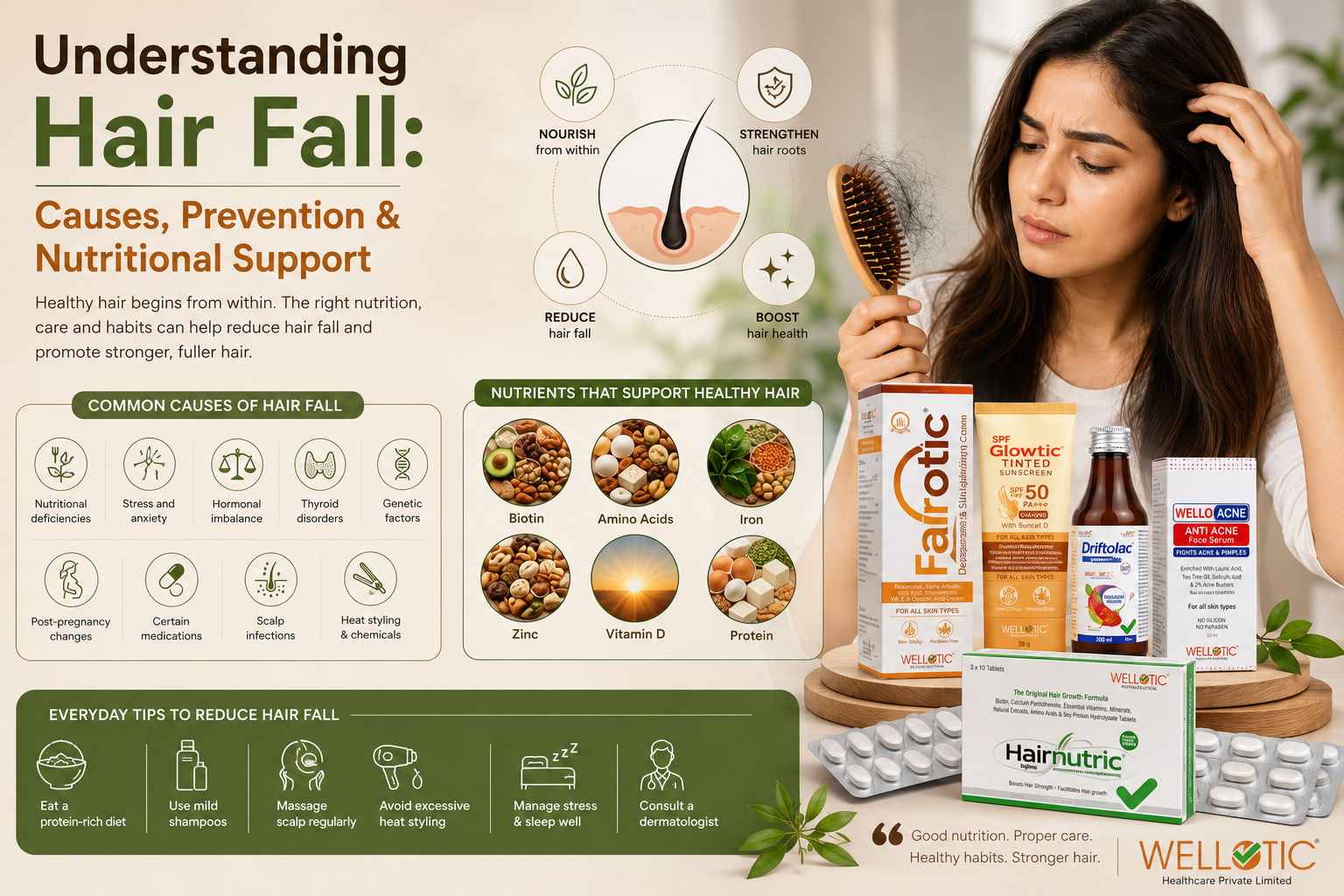
Understanding Hair Fall: Causes, Prevention & Nutritional Support
Hair fall is one of the most common concerns affecting both men and women. Losing around 50–100 hairs daily is normal, but excessive shedding, thinning, or reduced hair density may indicate an underlying issue.
Common Causes of Hair Fall
- Nutritional deficiencies
- Stress and anxiety
- Hormonal imbalance
- Thyroid disorders
- Post-pregnancy changes
- Genetic factors
- Certain medications
- Scalp infections
- Excessive heat styling and chemical treatments
Nutrients That Support Healthy Hair
Healthy hair requires continuous nourishment.
Biotin
Supports keratin production and strengthens hair structure.
Amino Acids
Essential building blocks required for hair protein synthesis.
Iron
Iron deficiency is one of the leading nutritional causes of hair loss.
Zinc
Supports healthy hair follicles and scalp function.
Vitamin D
Helps regulate the normal hair growth cycle.
Protein
Hair is primarily made of protein, making adequate intake essential.
Everyday Tips to Reduce Hair Fall
- Eat a protein-rich diet.
- Avoid crash dieting.
- Use mild shampoos suitable for your scalp.
- Massage the scalp regularly.
- Minimize excessive heat styling.
- Sleep well and manage stress.
- Consult a dermatologist if hair fall persists for more than three months.
Scientific Nutritional Support
Modern dermatology recognizes that nutritional supplementation can play a supportive role when deficiencies contribute to hair thinning. Under medical guidance, targeted supplementation may improve overall hair quality and strength.
Wellotic's Commitment
Wellotic Healthcare develops science-backed wellness formulations that support healthy hair from within by combining clinically relevant nutrients with quality manufacturing standards.
Conclusion
Healthy hair is the result of good nutrition, scalp care, healthy habits, and timely medical advice. Treat the cause—not just the symptom—for long-lasting results.